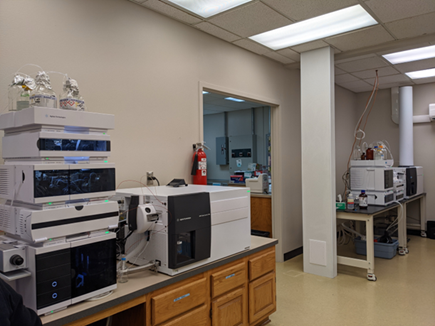
6PPD-quinone (6PPD-Q) was recently discovered to be responsible for large coho salmon die-offs in the Pacific Northwest. 6PPD is a compound commonly used in tires to prevent degradation and has been found in high concentrations in urban stormwater runoff. 6PPD-Q is a highly toxic compound that is created when 6PPD is exposed to air. Galveston Bay is heavily urbanized with millions of registered vehicles in the greater Houston area. Information about an emerging contaminant that is closely linked with urban stormwater runoff and known to be acutely toxic to some aquatic life is a priority to understanding the health of the bay.
This project was led by Dr. Michael Shields and Dr. Yina Liu at Texas A&M University, and they were focused on the amount of 6PPD-Q in the bay and what happens once it has entered the system. The specific questions to answer were: (1) What are the distributions of 6PPD and 6PPD-Q in Galveston Bay over two years in relation to changes in hydrographic conditions with variable stormwater inflows? (2) What are the possible transformation products being formed from photochemical reactions? (3) How does 6PPD and 6PPD-Q partition between water and sediments in Galveston Bay?
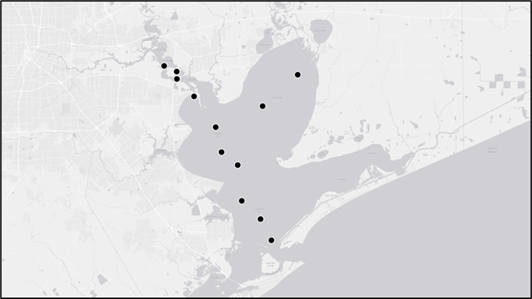
The water samples used were collected in a previous Galveston Bay Estuary Program funded project that sampled quarterly from twelve locations from March 2021 to March 2023. The sampling stations were located along a salinity gradient from the San Jacinto and Trinity Rivers to the mouth of Galveston Bay. At the creation of the previous project, the research on 6PPD-Q and its linkage to the coho salmon mortality was not yet published. Because the water samples were archived, they were able to test for 6PPD-Q years later when it was not a known concern originally. This highlights the importance of archiving water samples, when possible, for future research.
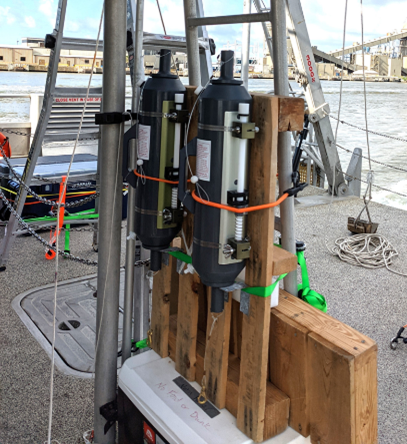
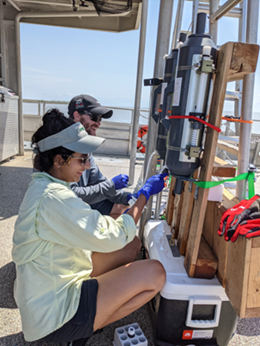
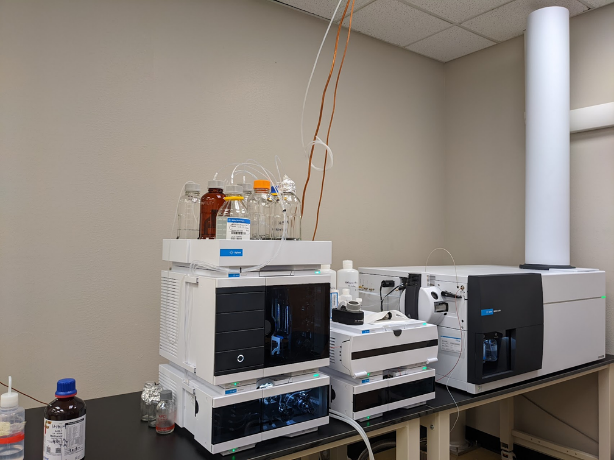
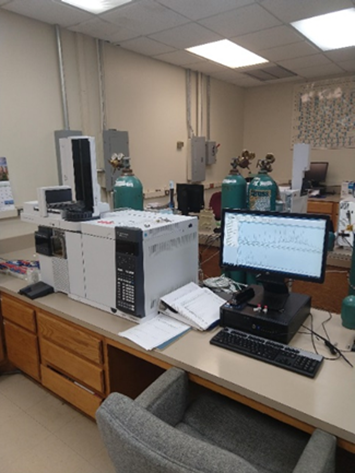
First, researchers looked at the concentration and distribution of 6PPD-Q in Galveston Bay water. Concentrations were highest in the Houston Ship Channel and decreased to below the level of quantification in the lower Galveston Bay. Increased freshwater inputs coincided with increased 6PPD-Q concentrations. This supports the observations from other systems that stormwater runoff is the main source of this compound to aquatic environments.
Next, they looked at the concentration and distribution of 6PPD-Q in Galveston Bay sediments. Concentrations of 6PPD-Q were highest in the Houston Ship Channel, and lower but still within the limit of quantification in the lower Galveston Bay. Sediment concentrations were higher than those in water, however, they did not have the same relationship with freshwater inputs. While stormwater runoff is the primary source of this compound, 6PPD-Q sediment concentrations are also affected by resuspension and redistribution of sediments in the bay.
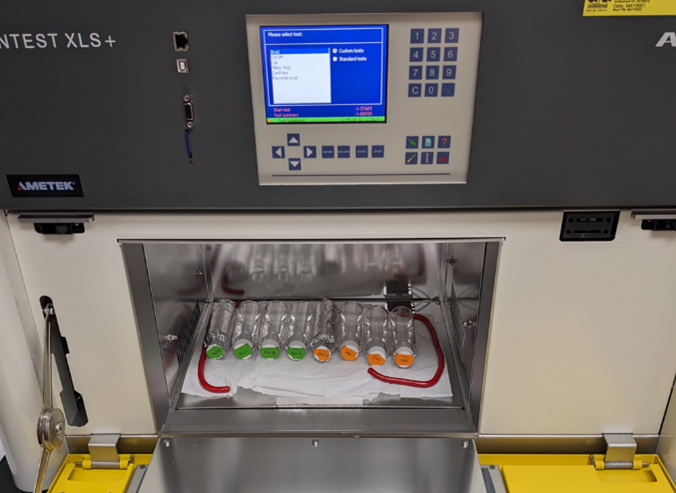
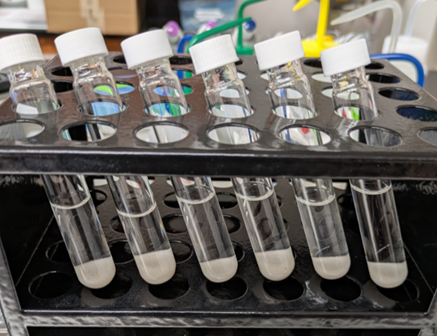
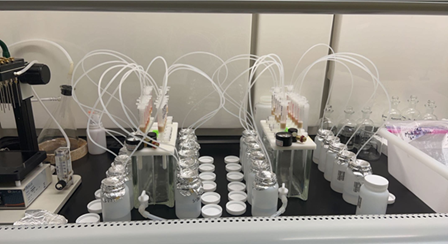
Researchers also looked at 6PPD-Q degradation under sunlight. They simulated long term sunlight exposure by spiking water sources with 6PPD-Q and placing them in a solar-simulator chamber that mimics sun exposure in Galveston Bay. They found that 6PPD-Q was rapidly removed following solar irradiation. Additionally, they investigated the sorption and desorption of 6PPD-Q with sediments. Both 6PPD and 6PPD-Q were shown to have a short residence time in the dissolved phase. 6PPD-Q is rapidly sorbed to sediments. For 6PPD, rapid sorption or degradation leads to its loss from the dissolved phase.
This project resulted in a two-year time series of 6PPD-Q temporal and spatial distribution throughout the bay and provided useful information on the transport, partitioning, and transformation pathways of this emerging contaminant. Data collected through this project is being used to provide the initial assessments on 6PPD-Q concentrations in Galveston Bay and will contribute to further studies aimed at understanding the effects of 6PPD-Q in the Galveston Bay watershed.