Project Background:
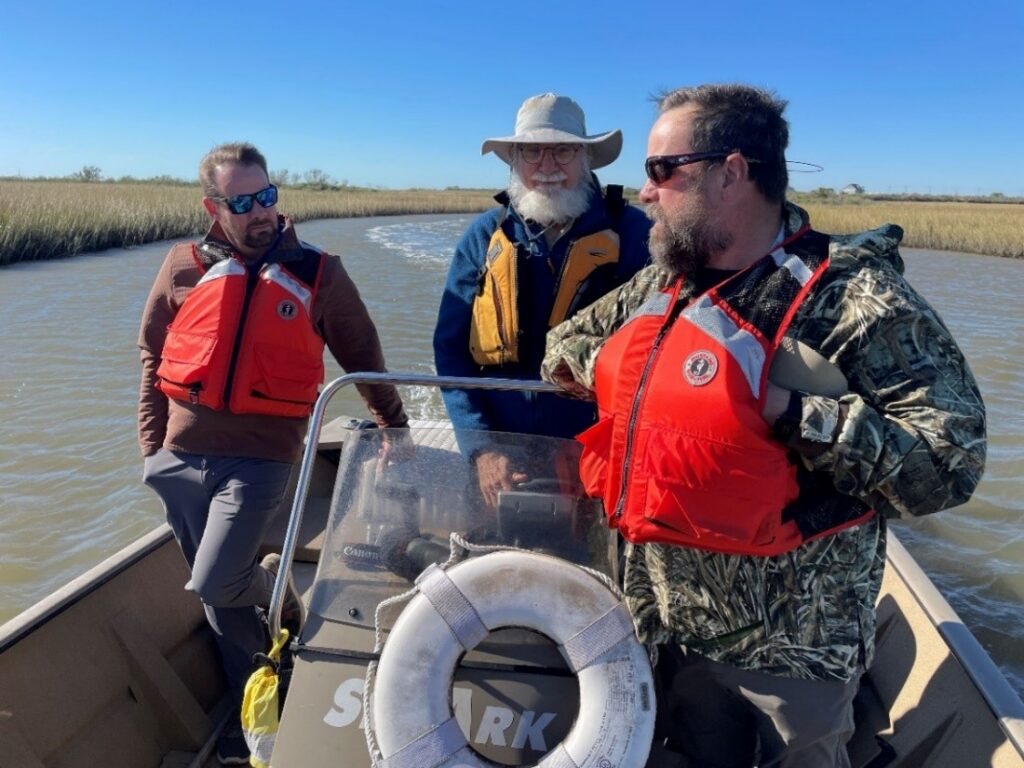
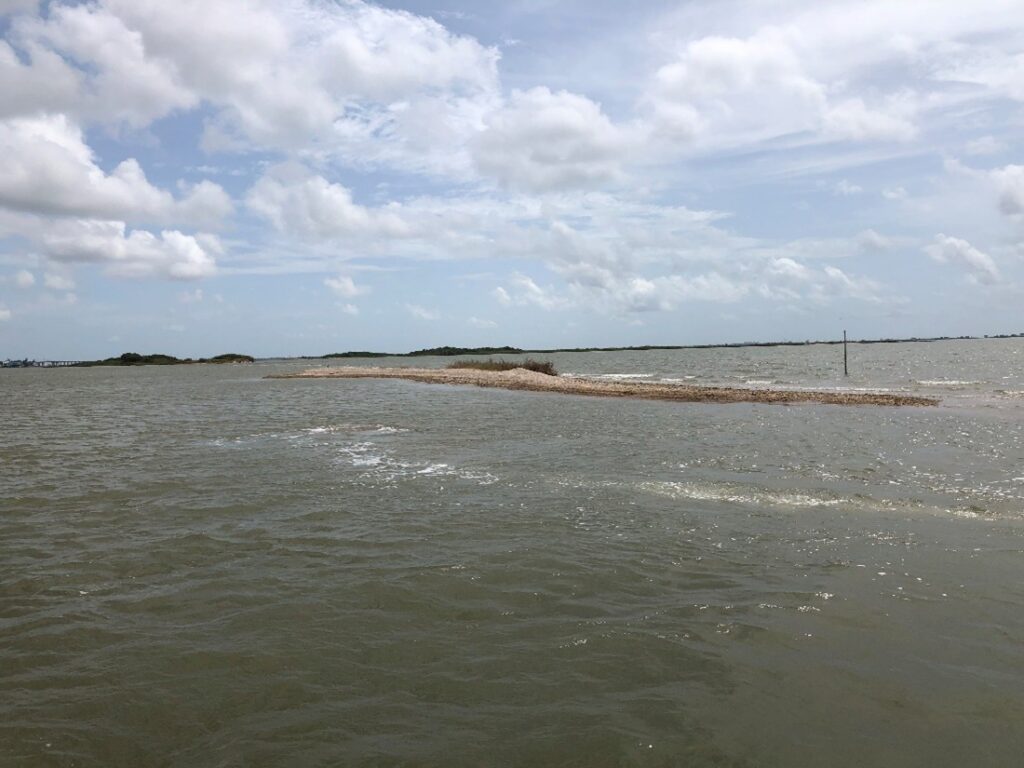
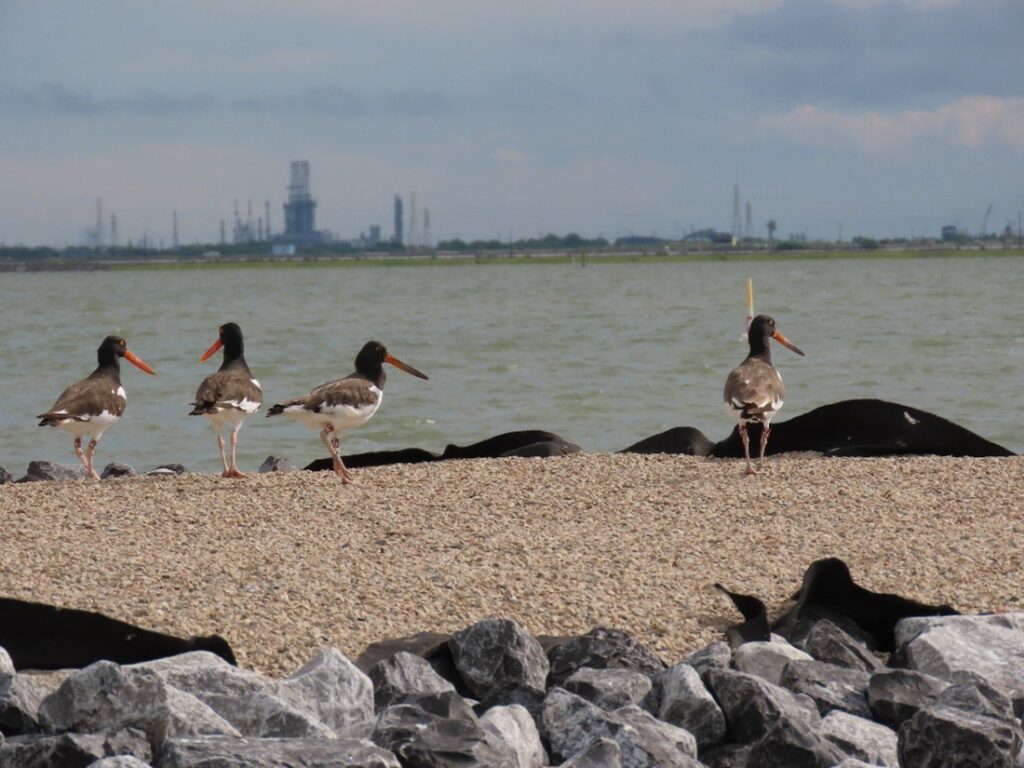
The American oystercatcher (Haematopus palliatus) is listed as a species of high concern in the U.S. Shorebird Conservation Plan[1] and designated as a TPWD priority species[2]. Furthermore, the state of Texas has designated the species as vulnerable due to low population numbers and recent declines. Over the last ten years, the Gulf Coast Bird Observatory (GCBO) has monitored the local population of oystercatchers in Galveston Bay. Their efforts indicate a steep decline in reproduction success, predominantly due to a lack of viable nesting habitat. In Galveston Bay, oystercatchers nest primarily on small bay islands where competition is low, but the threat of over-wash is high. Many of the once nestable islands in the Bay are now submerged. High tide events have also forced nesting oystercatchers to venture further for food as intertidal oyster reefs are often submerged and inaccessible to foraging birds. As a result, GCBO has documented a dramatic decline in reproduction success of the oystercatcher population throughout Galveston Bay, and Jones Bay in particular.
Congruently, declines in the Galveston Bay Eastern oyster population (Crassostrea virginica) have decreased foraging grounds and food availability for oystercatchers. Oyster reefs are an important habitat feature in upper Texas coast estuaries and provide food and shelter for over 300 different species including the American oystercatcher.
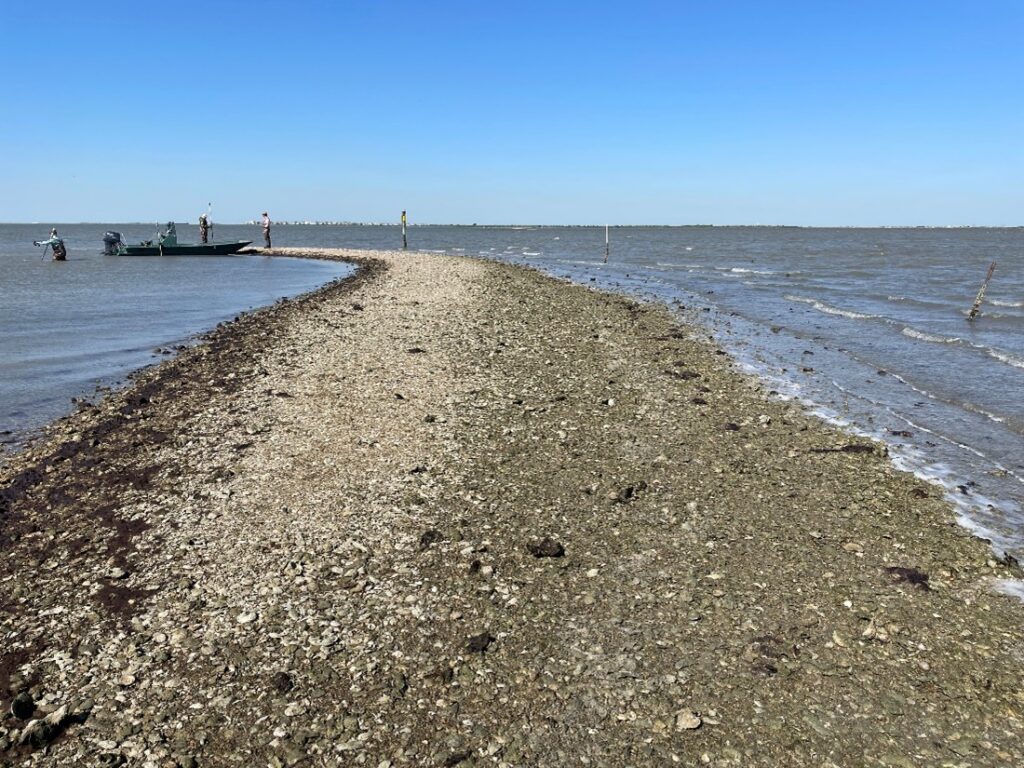
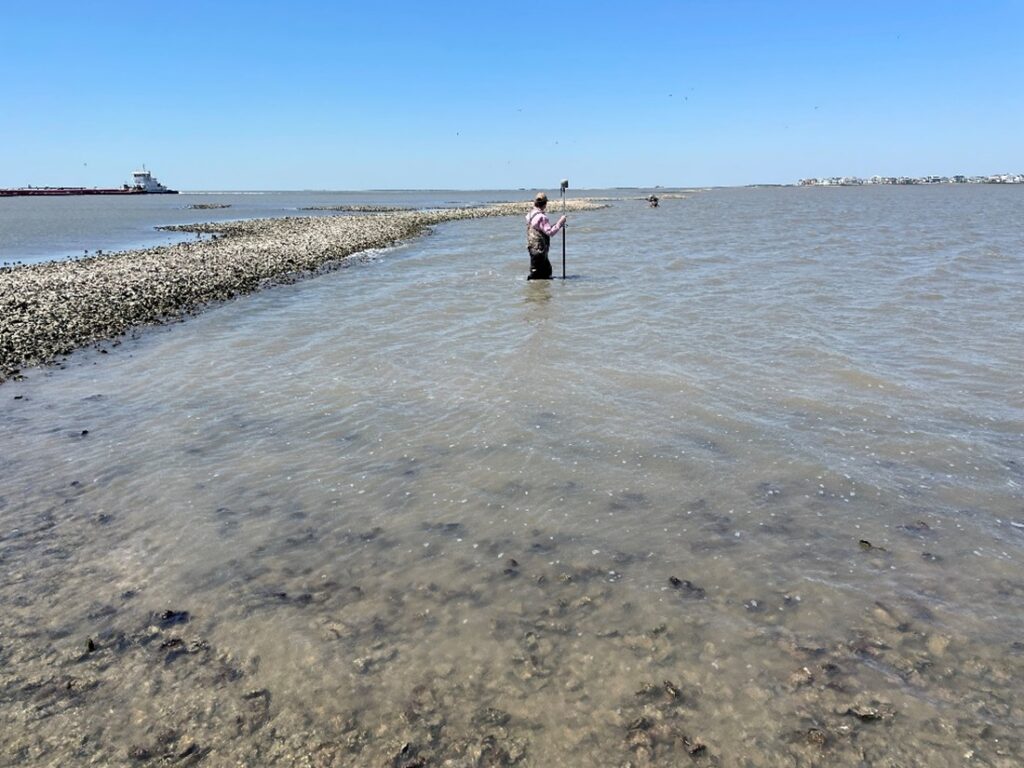
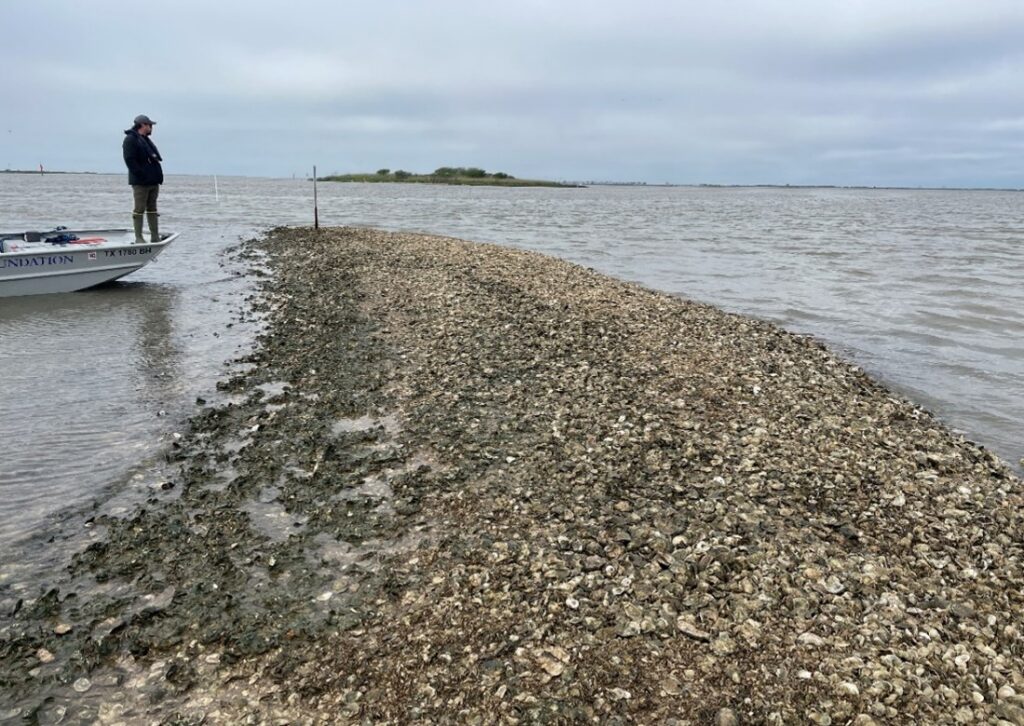
Jones Bay Oystercatcher Project
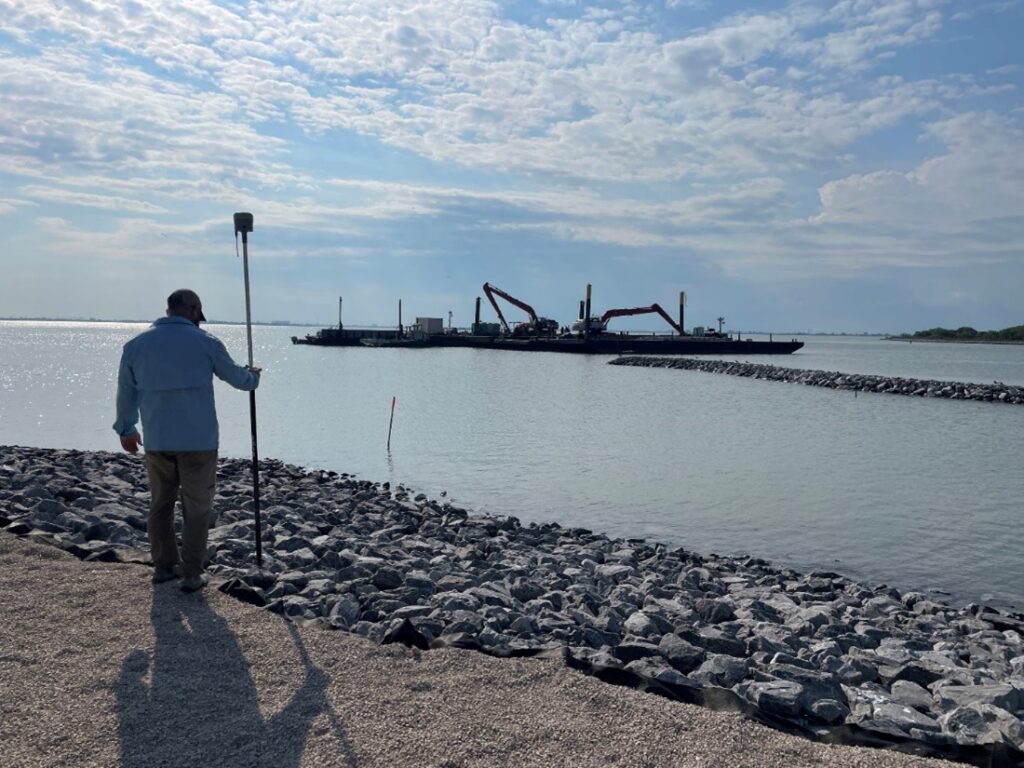
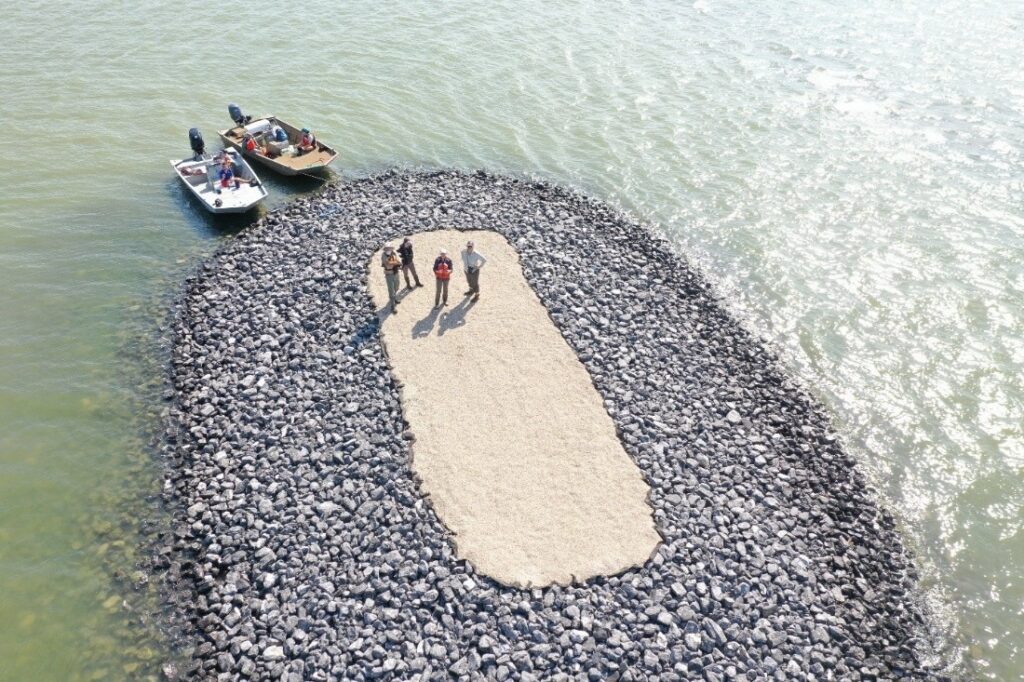
To counteract the negative impacts on both the terrestrial and aquatic habitat essential to the oystercatcher population, Galveston Bay Foundation (GBF) proposed to restore four sites in Jones Bay. Each site involved the enhancement of a remnant island to create areas of higher elevations to allow for successful nesting. In conjunction with each enhanced island, oyster reef complex was enhanced and/or created to provide nearby foraging habitat for nesting oystercatchers and their young.
Project activities began in August 2018 with the first advisory team meeting with GBF, GCBO, U.S. Fish and Wildlife Service (USFWS), Texas Parks and Wildlife Department (TPWD), and Ducks Unlimited (DU). The first full draft of design plans developed by DU were received in January 2020, with partial construction funding from the Texas General Land Office (GLO) Coastal Erosion Planning and Response Act (CEPRA) program awarded in July 2020. Additional construction funding was awarded from the Galveston Bay Estuary Program (GBEP) (2022), Texas Trustee Implementation Group (2022), and USFWS (2024).
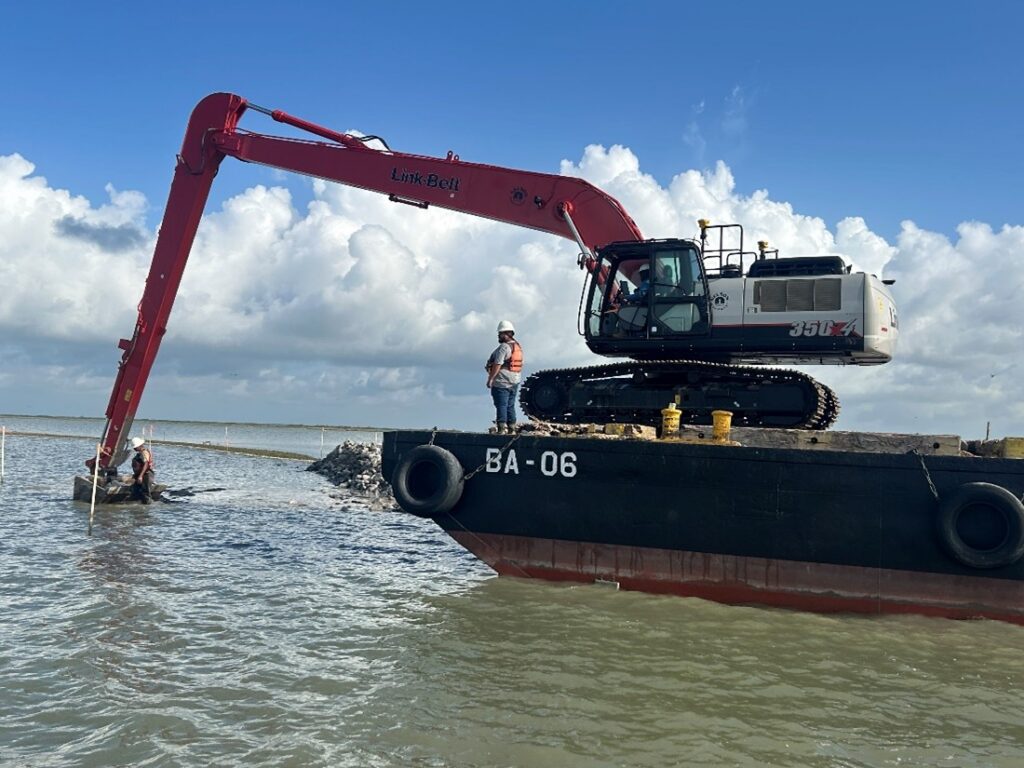
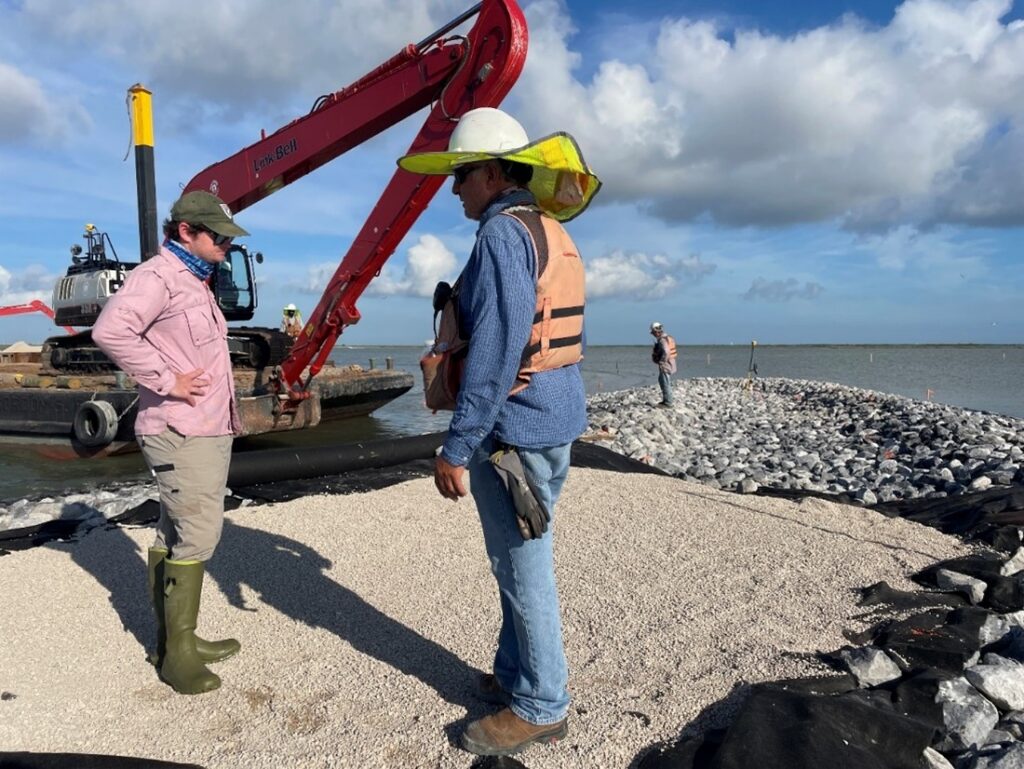
The contractor began mobilization on June 13, 2025, and staged equipment that required deep water along the GIWW. From this staging area, the contractor light loaded smaller barges to deliver construction materials to the project site. Construction occurred as weather and tide levels allowed. Construction started on Site 3 on July 8, 2025, a few delays were experienced due to low water conditions. Construction finished on Site 3 on August 4, 2025. Construction finished on Site 2 on August 18, 2025. Construction finished on Site 1 on August 21, 2025. Construction finished on Site 4 on August 25, 2025.
Lessons Learned
One lesson learned is to pay close attention to construction windows. The construction window was tight for this project because the area is in shallow waters, and work could not be completed during the winter months. The goal was for the project to go to construction in the fall of 2024. However, Hurricane Beryl made landfall in Houston in July of 2024 and disrupted work in the area for a few weeks. When work resumed there were concerns that procurement could not be finalized quick enough for construction to finish before winter. The decision was made to go to procurement at the beginning of 2025, but it was a good reminder to plan much further in advance for procurement than you think.
About Galveston Bay Foundation:
Galveston Bay Foundation is a conservation nonprofit that has served as guardian of Galveston Bay since 1987. Our mission is to preserve and enhance Galveston Bay as a healthy and productive place for generations to come. We work to facilitate a true cross-section of Bay interests through creative, inclusive and forward-thinking solutions to the challenges confronting Galveston Bay.
Through actions and partnerships and a commitment to sound science and research, we have five main program areas in which we work on behalf of the Bay. They are education, habitat restoration, water protection, land conservation, and advocacy. Each program area is broad and deep, offering a range of solutions and opportunities to preserve the Bay for generations to come. We envision a future Galveston Bay that is brimming with vitality, connected to people, and contributing to the community in every possible way.
[1] https://www.fws.gov/partner/us-shorebird-conservation-plan
[2] https://tpwd.texas.gov/wildlife/wildlife-diversity/nongame/listed-species/