
 The City of Houston currently sits as the largest public landowner in the city, managing 380 park spaces that span over 25,000 acres. Located within numerous watersheds throughout the city, these parks offer a unique opportunity to showcase water management practices that have large-scale impacts to both water quality and quantity throughout the region. Population and industry growth coupled with unpredictable and increasingly severe weather events has only furthered the need to better manage the city’s water resources.
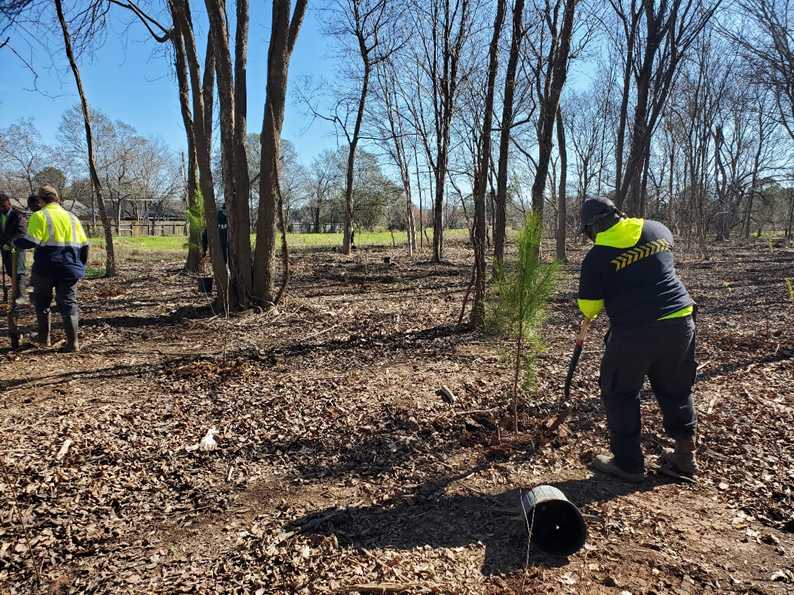
The City of Houston Parks and Recreation Department’s (HPARD) Natural Resources Management Program is tasked with delivering solutions to water quality and quantity problems for the department in the form of nature-based infrastructure projects. The City of Houston Riparian Restoration Initiative is targeting all parks adjacent to waterways for the creation of forested buffers to improve water quality within Houston’s Bayous and prevent erosion, among other benefits. The department is currently restoring/managing 130 acres of coastal prairie habitat within five parks and is also targeting reforestation of medians throughout the city. In order to support the increasing numbers of nature-based infrastructure features throughout the park system, HPARD identified the need for a Water Management Plan (WMP). The plan would serve to establish overarching policy stances for impacts to water quality and quantity throughout the park system and rights-of-way in Houston. In fiscal year 2023, HPARD was awarded grant funding through GBEP under Section 320 of the Clean Water Act to create such a plan.
To maximize impact, HPARD sought to align the WMP with current city, county, and regional water planning efforts. The goal is to both reduce water use and improve water quality in City of Houston parks by standardizing internal water use practices, improving water efficiency, and supporting the implementation of nature-based solutions. The WMP establishes standard operating procedures to improve efficiency, monitoring capacity, and intervention efficacy. This allows HPARD to reduce water use while ensuring the same level of amenity provision and environmental restoration activities. The plan also identifies potential contaminants within the parks and establishes best management practices (BMPs) for minimizing the introduction of potential pollutants while also providing strategies for mitigating external contaminants through nature-based solutions. The WMP also establishes the following:
- Nature-based infrastructure goals for the preservation, enhancement, and acquisition of natural habitat throughout the City of Houston;
- Strategies to manage invasive species adjacent to waterways;
- An analysis of nature-based stormwater infrastructure features that could be associated with future project developments to improve water quality of impervious features added to park projects;
- Recommendations for achieving consistency in irrigation practices to reduce water consumption associated with landscaping and tree planting projects throughout the city;
- Detailed analysis of fertilizer and pesticide use within the department;
- Analyze BMPs throughout the department to create specific standard operating procedures to be followed by departmental staff;
- Recommendations for actions to reduce water loss and water waste; and,
- Drought contingency planning including prescribed burns and wildfire planning.
HPARD’s WMP serves to meet the needs of a rapidly growing city while also ensuring the protection of its natural resources. The plan aims to establish and demonstrate BMPs that support regional water initiatives while offering new models of water management in the region. Implementation of structural and nonstructural best management practices including fertilizer use reduction, decreased use of irrigation, and creation of natured-based infrastructure goals for future park development projects all help to reduce sources of nonpoint pollution entering Houston waterways. Prudent management of the city’s water resources through projects such as these help to ensure their continued use well into the future.